

What Is ADAS Calibration?
ADAS stands for Advanced Driver Assistance Systems and refers to the suite of safety technologies built into modern vehicles, including lane keeping assist, automatic emergency braking, forward collision warning, adaptive cruise control, and blind spot detection. These systems rely on cameras and sensors that are precisely calibrated to function correctly. Any time a windshield is replaced, those cameras and sensors lose their calibration because the glass through which they operate has changed. ADAS calibration is the process of resetting those systems to the correct parameters for that specific vehicle so they function as the manufacturer intended.
IN-SHOP & FREE MOBILE SERVICES
CERTIFIED AUTO GLASS TECHNICANS
LIFETIME WARRANTY ON WORKMANSHIP
Static Calibration
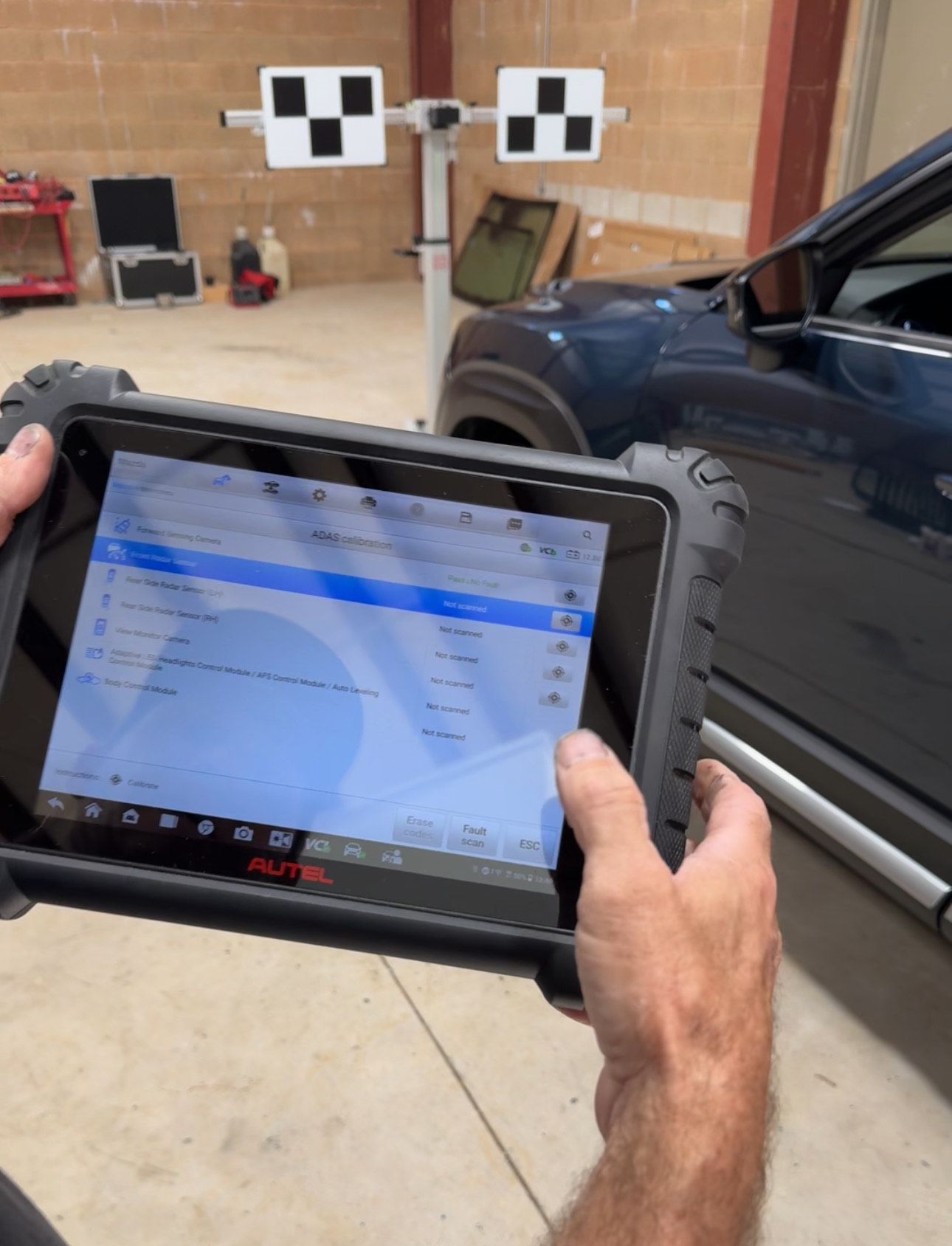
Static calibration is performed with the vehicle parked in a controlled indoor environment. A calibration target, which is a specialized board or pattern, is positioned at a precise distance and angle in front of the vehicle based on the manufacturer's specifications for that make and model. The camera system is then aligned to that target using diagnostic software until the correct calibration values are achieved. Static calibration requires a level surface, specific lighting conditions, and enough space to position the target correctly, which is why it is always performed in a shop setting rather than on the road.
Examples of vehicles that commonly require static calibration include many Subaru models with EyeSight technology, certain Toyota and Lexus models, and various European vehicles from manufacturers like BMW, Audi, and Mercedes-Benz.
Common Features of ADAS:
Adaptive Cruise Control (ACC)
Lane Departure Warning (LDW)
Automatic Emergency Braking (AEB)
Blind Spot Detection (BSD)
Parking Assistance
Driver Monitoring Systems
Dynamic Calibration
Dynamic calibration is performed while the vehicle is driven at a specific speed on a road with clearly visible lane markings. The camera system recalibrates itself by reading real-world road data as the vehicle moves. A technician drives the vehicle through the calibration process, which typically takes anywhere from a few miles to several miles depending on the manufacturer's requirements. Dynamic calibration requires suitable road conditions and specific driving parameters to complete successfully.
Examples of vehicles that commonly require dynamic calibration include many Ford and General Motors models, certain Honda and Acura vehicles, and others where the camera system can recalibrate using live road input rather than a stationary target.
Which Type Does Your Vehicle Need?
The type of calibration required depends entirely on the vehicle's make, model, year, and the specific ADAS systems it is equipped with. Some vehicles require static calibration only, some require dynamic only, and some require both to be performed in sequence. The manufacturer's specifications for that vehicle determine the correct process, and there is no universal answer that applies across all vehicles.
Sierra Mobile Glass uses professional diagnostic equipment and follows manufacturer calibration procedures for every vehicle that comes through, ensuring the correct type of calibration is performed and verified before the vehicle leaves service.
Get Certified ADAS Calibration With Your Windshield Replacement
Sierra Mobile Glass serves Grass Valley, Truckee, and the surrounding region with certified windshield replacement and ADAS calibration. Request a free quote today and get the right calibration performed correctly for your specific vehicle by an award-winning auto glass team.